Thursday, February 15, 2024

January 2024


2023 OSCAR NOMINATIONS

       For decades, I’ve used this space to disparage the selections made by the usually nearsighted Academy voters. But I must give the group props this year as they did an admirable job of voting in a respectable collection of nominees, most prominently withstanding the “Barbie” propaganda machine that attempted to equate its box-office success with being a good movie.


The picture still scored best picture, best screenplay and best supporting actor nods, but the voters left director Greta Gerwig out of the five nominated filmmakers. “Barbie” fanatics somehow see her exclusion (is it a snub when someone finishes sixth or seventh in a vote?) as a comment against female empowerment. Instead, they should be more upset that Celine Song for “Past Lives” (a best picture nominee) and Nicole Holofcener for “You Hurt My Feelings” (totally ignored) were left out; these women, by my account, were the outstanding female directors of 2023. Gerwig’s spot on the five select directors was most likely taken by another female filmmaker, French director Justine Triet for “Anatomy of a Fall,” displaying the Academy’s recent move toward rewarding more international pictures.

     From my perspective, the filmmaker who should be most upset with the directing nominations is Bradley Cooper (he was acknowledged for his acting and screenwriting), whose “Maestro” direction establishes him as one of Hollywood’s best filmmakers, bringing style and thoughtfulness to the bio-pic genre.  

      The film that Academy voters completely whiffed on was “All of Us Strangers” (see my review below), a riveting, superbly written and acted study of a gay man coming to grips with his life and the loss of his parents. Actors Andrew Scott and Claire Foy both deserved recognition, along with director Andrew Haigh’s script.

      Most of the other misses by the Academy were in the supporting categories: considering all the nominations for “Poor Things” I don’t know how they left out Willem Dafoe, who gives the film’s best performance. Among supporting actresses, three of the finest performers working in cinema: Penelope Cruz (“Ferrari”), Rosamund Pike (“Saltburn”) and Viola Davis (“Air”—why do voters always ignore movies released before May?) should all be competing for the Oscar. 

     The Academy voters disagreed with my objections to “The Zone of Interest” (see below) but there’s always one of those every year. Yet seeing one of my longtime favorite actors, the underrated Jeffrey Wright, among the nominees made up for much foolishness. 

     Here’s my Top 10, though there’s still a few pictures I still need to see. (I will be shocked if “Oppenheimer” isn’t the big winner next month at the Oscars.)

     1  Oppenheimer (Christopher Nolan)

     2  Poor Things (Yorgos Lanthimos)

     3  Maestro (Bradley Cooper)

     4  All of Us Strangers (Andrew Haigh)

     5  The Holdovers (Alexander Payne)

     6  Killers of the Flower Moon (Martin Scorsese)

     7  Ferrari (Michael Mann)

     8  Napoleon (Ridley Scott)

     9  Past Lives (Celine Song)

    10  American Fiction (Cord Jefferson)

     Just below this fine collection of films are Paul Schrader’s “Master Gardener,” Christopher McQuarrie’s “Mission: Impossible—Dead Reckoning Part One,” Ben Affleck’s “Air” and Nicole Holofcener’s “You Hurt My Feelings.” My complete list of the year’s best will be posted in a week or so.


ALL OF US STRANGERS (2023)

      Few films have successfully tackled loneliness, one of the most prevalent aspects of the human condition; the thin line between maudlin sympathy and clear-eyed insight is hard to navigate. With subtlety and sincerity, writer-director Andrew Haigh’s “All of Us Strangers” examines sadness in the human heart through a man’s imagination.
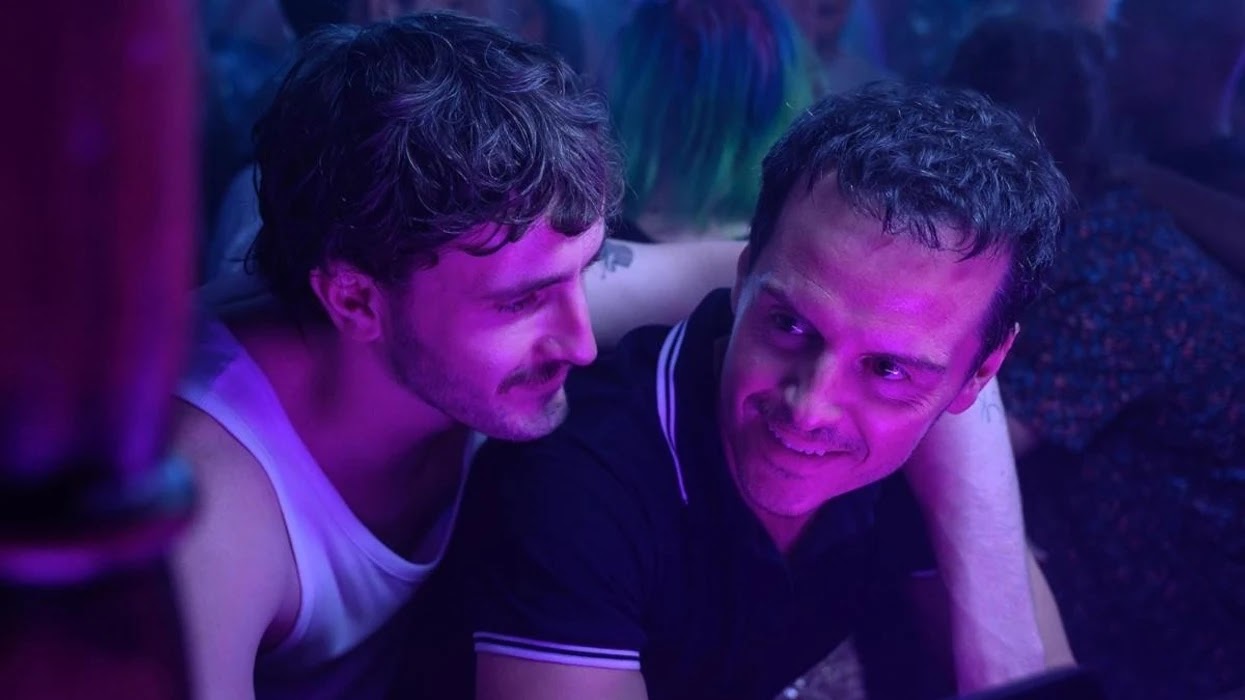

     Andrew (a quietly intense Andrew Scott), a screenwriter living in a brand-new apartment complex in London, faces his solitary existence—he seems to have no friends or colleagues—by conjuring up very realistic apparitions of his long-dead parents, visiting them in his family home.

      Mom and Dad (Claire Foy and Jamie Bell) are surprised by their son’s visit but quickly accept the situation (while recognizing they are dead) and try to understand what has become of 40something Andrew they last knew as a 12-year-old. Yes, it sounds hokey, but Haigh makes it work perfectly.

      The conversations are sad, heartbreaking but also deeply revealing and impactful for Andrew, who still has issues from his youth. When he announces to his parents that he’s gay, the discussions grow more intense, more to the point of his disappointment about his life.

     Around the same time, the other resident in the high-rise, Harry (Paul Mescal), shows up at Andrew’s door, drunk and seeking companionship. Quickly, a bit conveniently, they become intimate and inseparable, but mostly staying in Andrew’s apartment.

     Haigh’s script, loosely based on Japanese novelist Taichi Yamada’s book, puts much of the burden to make the film work on the actors and the four principles deliver.

      Scott, who richly deserved an Oscar nomination, has been working in film (“Spectre,” “1917”) and on the British stage, giving an acclaimed performance as Hamlet, since the mid-90s. On the heels of this memorable film, Scott will play infamous conman Tom Ripley in an upcoming series.

      Mescal, who scored a best actor Oscar nod in 2022 for “Aftersun,” gives Harry a dangerous, mysterious aura while being a caring lover to Andrew. This could be a star-making year for Mescal as he plays the lead in Ridley Scott’s sequel to “Gladiator.”

       Foy (“The Crown”) and Bell (“Billy Elliot,” “Rocketman”) are conventional 20th Century parents whose concerns for their son, who grew up without them, represents the fragile relationship that most children have with their mother and father. I can’t imagine anyone not relating to their scenes with Scott. 

      Haigh, with this film and “45 Years” (2015), which earned Charlotte Rampling a best actress nomination, displays an ability to take stagey, occasionally claustrophobic stories and turn them into compelling cinema.


THE ZONE OF INTEREST (2023)

     British director Jonathan Glazer specializes in snail-paced, quietly horrific stories—“Birth,” “Under the Skin” and, his best, “Sexy Beast”—but his chilly approach to filmmaking seems reductive and inappropriate in this off-centered slice of the Holocaust.

    Just outside the fences of Auschwitz, where the most inhuman crimes of the 20th Century were being committed daily, the commandant of the death camp, Rudolf Höss (Christian Friedel), his wife Hedwig (Sandra Hüller) and children enjoy a tranquil life, seemingly untouched by the conflict devasting Europe.

    Glazer lingers over mundane moments of the family’s day-to-day existence without entering into the camp where Jews are being slaughtered.

     I can imagine this approach working for part of the film—maybe as a 15-minute opening—but when the film’s most intense conflict arises when Rudolf must leave his home in Poland, I gave up. Maybe I’m too dense, or too schooled in Hollywood filmmaking, to appreciate the director’s take on mass murder, but I found nothing of substance or value in the German-language film.

    This picture adds little to the rich legacy of big-screen depictions of the camps and the arrogance of the Nazis. Its inclusion among best picture and best director Oscar nominations is a travesty, worse than the praise for the goofball 1998 comedy “Life Is Beautiful.”  


THE LOST MOMENT (1947)

      The most famous directing one-offs in cinematic history include two masterpieces, Charles Laughton’s “The Night of the Hunter” (1955) and Jean Vigo’s “L’Atalante” (1934), and three memorable pictures, “One-Eyed Jacks” (1961), Marlon Brando’s only turn behind the camera, and two 1970 cult favorites, “The Honeymoon Killers,” directed by Leonard Kastle, better known as a composer of operas, and “Wanda,” made by actress Barbara Loden. (Vigo and Loden also directed a few short films.)

       Other one-time directors include actors Jack Lemmon (“Kotch”), Anthony Quinn (“The Buccaneer”) and Frank Sinatra (“None but the Brave”).

      This film, a Hitchcockian, romantic mystery, deserves a spot among the better efforts made by one-and-done directors. Martin Gabel was a well-known member of the Mercury Theatre, on stage and radio, and then later a movie character actor, usually playing a tough guy in such films as “Deadline-U.S.A.” (1952), “Tip on a Dead Jockey” (1957), “Lady in Cement” (1968) and “The First Deadly Sin” (1980). He was also married for 40 years to television personality Arlene Francis.

     Before he started acting in films, possibly inspired by the success of his Mercury boss Orson Welles, Gabel was hired to direct “The Lost Moment,” based on Henry James story “The Aspern Papers,” and headlined by two major stars, Robert Cummings and Susan Hayward.


    While not quite “Citizen Kane,” the picture combines noirish shadows with literary secrets and features an intense performance by fellow Mercury player Agnes Moorehead. Cummings plays Lewis Venable, a rather unethical book publisher determined to find the long-lost love letters written by 19th Century romantic poet Jeffrey Ashton. This performance ranks with his best film work, “Kings Row” and “Saboteur.”

      Pretending to be a writer, he rents a room in the estate of elderly Juliana Bordereau (Moorehead, wearing a prosthetic mask to look 100 years old) in hopes of obtaining, or stealing, the letters. But keeping an eye on everything in the house is her strangely robotic niece Tina (Hayward), who seems to be under the spell of the household’s past. The late-night meetings between Lewis and Juliana, who claims to never sleep, are memorable.

      The gothic mood maintained throughout and the fine performances—also Eduardo Ciannelli as the local priest and Joan Lorring as the oppressed, gossipy housekeeper—reflect well on the first-time director. Gabel is greatly aided by a pointed, unsentimental script by Leonardo Bercovici, who went on to work on the adaptations of two other mystical tales, “The Bishop’s Wife” (1947) and “Portrait of Jennie” (1948).

     Hayward was nominated for best actress five times in the late 40s and 1950s, starting with “Smash Up: The Story of a Woman” the same year she made “The Lost Moment.” But I would argue that her best performances were not in those melodramas that made her famous but in lesser-known picture such as this one, along with “Deadline at Dawn” (1946), “They Won’t Believe Me” (1947), “The Saxon Charm” (1948) and “The Lusty Men” (1952).

     I was unable to find any information on why Gabel never directed again; it’s hard to believe he didn’t have the chance after this impressive start. The film can be streamed for free on Youtube.


ANATOMY OF A FALL (2023)

     I’ve read that this critically acclaimed courtroom drama failed to receive an international film nomination because France authorities were upset at director Justine Triet’s comments about President Emmanuel Macron when she accepted the Palme d’Or at Cannes. Instead, the Academy voters rewarded the movie with nominations for best picture, director, actress, original screenplay and film editing!  

     After seeing the film, I think there were more artistic reasons why the French declined to put it forth to the Academy. It’s a fine, if inconsistent, film, but not as interesting as a dozen murder-mystery streaming series I’ve watched in the past few years. “Anatomy of a Fall,” with dialogue half in French, half in English, follows the investigation and then the trial after a well-known writer’s husband falls (or is pushed) to his death from a second-floor window. Sandra Hüller, who plays the wife in “The Zone of Interest,” portrays Sandra Voyter, who eventually lands in the docket, accused of murdering her husband.


       Combining typical elements of “Law and Order” with an intense domestic drama (better explored in films such as “Marriage Story,” “Fences,” “Manchester by the Sea”), the picture focuses on the unrelenting questioning by the prosecuting attorney that attempts to dig into the less-than-perfect marriage between Sandra and Samuel (Samuel Theis). It occasionally flashes back to arguments and situations between them and with their young son, who plays an important part in the court’s deliberation. 

     I understand Triet’s nomination (with co-writer Arthur Harari) for the film’s screenplay—the story remains compelling from start to finish—but too often the direction felt disorganized and choppy. I usually have no problem with long films, but this one certainly did not need to be 2 hours and 30 minutes. 

    The film offers an intense dramatization of a very complex marriage, focusing on how difficult it is to judge relationships from the outside, but constructing the story around a crime might not have been the best plan.


FIVE MINUTES TO LIVE (1961)

     I’ve seen more than my fair share of bad movies, but few are as incompactly written and acted as this offbeat, D-level heist picture.

     Beloved country-western musician Johnny Cash stars, giving one of the most  inept performance in film history as Johnny Cabot.

     This dumb-as-nails loser joins Fred Dorella (Vic Tayback, the restaurant owner from the TV show “Alice”) in a plot to kidnap the wife of a small-town bank president and then hold up the bank. Most of 80-minute crudely shot and directed

picture—I’m guessing it played mostly drive-ins—has Johnny trying to act tough as he holds the frightened wife (Cay Forester) captive in her home.  His jittery, baritone voice, which made him one of the most acclaimed singers of the century, and his clumsy line readings (I doubt there were many second takes), make his character hard to take seriously.  

    A series of phone calls signally when Fred has completed the bank robbery keeps getting confused and even the actors—certainly Cash—seem baffled.

     All the while, Johnny points an oversized pistol—it looks like something left over from a low-budget Western, at the wife. The best moments in the film are when 7-year-old Ronnie Howard comes home from school early and screws up the robbers’ plans. Howard gives the most accomplished performance in the picture.

      This mess was director Bill Karn’s follow-up to his drive-in “classic,” “Ma Barker’s Killer Brood.” Not surprisingly, “Five Minutes to Live” ended his career.

     Unlike his director, the Man in Black went on to appear in numerous TV movies and a few features over the next 30 years (including co-starring with Kirk Douglas in “A Gunfight”); certainly, it was all uphill from “Five Minutes to Live.”


THE IRON CLAW (2023)

      As a kid, one of the highlights of each weekend was watching “Studio Wrestling” on Saturday morning. The star of the Pittsburgh show was Italian-born Bruno Sammartino, who was always touted as the World Champion of Wrestling. But even to an 11- or 12-year-old, it was clear that the contests were staged for laughs, scripted battles not much different than a “Three Stooges” short.

     In Dallas, the Von Erich family took it much more seriously. Led by a demanding, masochistic father, former wrestler Fritz (in the film played an intense Holt McCallany), the four sons all end up in the ring, for better or worse.

    The story is seen through the eyes of oldest son Kevin (Zac Efron), who starts out as the chosen one, following his father’s orders without a word of dissent, and then is pushed aside for brothers David (Harris Dickinson) and Kerry (Jeremy Allen White). 

    The film, written and directed by Sean Durkin (“The Nest”), alternates between sweaty success between the ropes and devastating personal tragedies without much subtlety between. The acting is fine throughout but the camera keeps turning away, and the script falls short, just when you think one of these sons are going to reveal their inner demons.

    Another difficult balancing act the movie tries to pull off is the Von Erich belief that they are athletes, ignoring the reality that they are in the entertainment business. One of the best moments of the film comes late when new wrestling superstar Ric Flair (wild-eyed Aaron Dean Eisenberg) comes into the locker room after what looked like an incredibly intense battle with Kevin. Flair clearly understands he’s just an actor, has a good laugh and wants to go out drinking with his opponent.

    What “The Iron Claw” does best is portray the us-against-the-world mentality of so many traditional-value Americans, who refuse to admit that, maybe, they are taking the wrong path.


PHOTOS:

Margot Robbie in "Barbie"  (Warner Bros.)

Paul Mescal and Andrew Scott in “All of Us Strangers.” (Searchlight Pictures)

Susan Hayward and Robert Cummings in “The Lost Moment.” (Universal Pictures)

Sandra Hüller in “Anatomy of a Fall.”  (MK2 Films)

Harris Dickinson, Zac Efron, Stanley Simons and Jeremy Allen White are wrestling brothers in “The Iron Claw.” (A24)

Tuesday, January 2, 2024

December 2023


MAESTRO (2023)

     Henceforth, any filmmaker considering making a movie about a famous person should be required to watch this magnificently conceived portrait of mid-century musical giant Leonard Bernstein. Directed, co-written and starring Bradley Cooper, this energetic, emotionally raw picture, filled with adulation and criticism of the composer-conductor tells the story of how his addiction to fame and his sexual dalliances with men slowly destroyed his heterosexual marriage.

     After a short scene of Bernstein as an old man, the narrative begins, in black and white, on Nov. 14, 1943, the day that Bernstein filled in as conductor of the New York Philharmonic, without any rehearsals, instantly turning him into a celebrity in the classical music world. He jumps out of the bed he’s sharing with lifelong friend and lover David Oppenheim (Matt Bomer) and rushes ahead to the opportunity of a lifetime. Cooper quickly summarizes the great man’s entire life in this short sequence.

     At first, Cooper, looking astonishingly like Lenny (as he’s known to all), seems to be overacting, exaggerating the man’s enthusiasm, but soon it is clear that this was Bernstein and his exuberance is central to the story. In many ways, the first part of the movie reminded me of “Citizen Kane” in the way Cooper has the characters speak in declarative sentences, his use of full-frame closeups and the rushing about of the star as if there aren’t enough hours in the day.

    He meets actress Felicia Montealegre (a glowing Carey Mulligan) at a show-biz party (songwriters Adolph Green and Betty Comden are performing) and is instantly attracted. As the film portrays their relationship, it wasn’t a gay man using her as a public cover, but a deep love that lasted 25 years and produced three children.

    Their marriage gives the film its gravity, as Lenny’s achievements and affairs encircle his life, both keeping from being the husband and father he should be.

    In the last quarter of the film, there’s a heartbreaking argument between Felicia and Lenny that feels so real it’s hard to watch. Cooper and his “A Star Is Born” cinematographer Matthew Libatique, now filming in muted color, hold the shot for the entire scene, while outside the windows of the apartment the floats of the Macy’s Thanksgiving Day Parade move by. The entire film is filled with powerful images but Cooper and Libatique outdo themselves here.

    I rarely mention a film’s makeup, but two-time Oscar-winner Kazu Hiro’s work aging Cooper as Bernstein is crucial to the story’s believability; it’s almost shocking how real the 48-year-old actor looks as an old man. And Cooper adds to that believability by nailing the man’s distinctive vocal mannerisms.

      It’s so difficult to make bios sound fresh and realistic, but “Maestro” does that from start to finish. Cooper’s co-writer is maybe the best screenwriter working in Hollywood today, Josh Singer. Among his credits are “Spotlight” (he won an Oscar), “The Post” and the Neil Armstrong story “First Man,” having started as a writer on TV’s “The West Wing.”

     Of course, the film offers glimpses of Bernstein’s famous works: his partnership with choreographer Jerome Robbins (Michael Urie), starting with the ballet “Fancy Free” that turned into the Broadway hit “On the Town” and what may be the quintessential American musical, “West Side Story” along with his collaborations with fellow composer and close friend Aaron Copland (Brian Klugman).

      Since his breakthrough as a serious actor (no, I don’t count “Wedding Crashers” or “The Hangover”) in “Silver Lining Playbook” (2012), Cooper has racked up nine Oscar nominations (producing, acting, writing) and, as a director, breathed new life into an old war horse of a musical, “A Star Is Born.” He’s done plenty of outstanding film work, but this is the film that will define him as an artist, as both a filmmaker and an actor. In any other year, he’d be the favorite for best director, but Martin Scorsese and Christopher Nolan will keep him from that prize.

        As much as Cooper dominates the film, Mulligan is right there with him, giving a more down-to-earth performance but always reflecting Felicia’s joy in Lenny’s successes. One of the most effortless performers in movies, Mulligan sinks into her characters as well as anyone working today (as in “She Said,” “The Dig,” “The Great Gatsby,” “Shame”), rarely giving the showy performances that win awards—though her Cassandra in “Promising Young Woman” was an exception. Most years, her work here would be a shoo-in for best actress Oscar, but I think Lily Gladstone from “Killers of the Flower Moon” has that wrapped up.

      A caveat to my enthusiasm for “Maestro” is the same as I had for recent films “The Post” and “Mank,” among others that look back at historic events: Is there anyone under 60 who knows or cares about the subjects of the pictures? Few. But maybe this superb movie will enlighten those unfamiliar with Bernstein to the importance of this giant of 20th Century music. Or, at least, they will relate to the underlying theme of the artist struggling to balance work with a personal life. 


POOR THINGS (2023)

     Imagine “Frankenstein” as a coming-of-age story, with plenty of sex thrown in, and you’ll have an idea of what Yorgos Lanthimos’ latest venture into the twisted psyche of humanity is all about. And, by the way, it’s a comedy.

     If the film earns a best picture Oscar nomination, as is expected, it will be the most sexually explicit, and possibly most bizarre, film ever to be considered for the top Academy Award; it makes most David Lynch films look like an episode of “Mayberry R.F.D.” But it grows on you. While there were many scenes I couldn’t watch—Lanthimos’ leaves little to the imagination during the dissecting (and reassembling) of cadavers—the journey Bella Baxter (a daring Emma Stone) embarks on when she leaves her creator, Dr. Godwin Baxter (Willem Dafoe, unforgettable as always), resonates as an extreme version of a road we’ve all travel in one way or another.

    Set in some vague period of 19th Century London, the story begins with a young, pregnant woman tossing herself into the river and dying. Once Godwin takes possession of the body, he manages to re-animate her, implanting the fetus’ brain inside the woman’s head. Sounds like another twisted David Cronenberg picture or maybe a Vincent Price-Roger Corman drive-in movie from the 1960s, but screenwriter Tony McNamara (“The Favourite”), working from a novel by Alasdair Gray, has bigger plans for Bella than just being a weird scientific experiment.

     Barely able to speak and walking with difficulty, Bella seems to have no censor on her brain, saying and doing whatever she feels no matter the circumstances. And then, just as she discovers sexual pleasure, Duncan (Mark Ruffalo), a rather goofy lawyer shows up, and whisks her away on a Dickens-like adventure with computer-generated, dreamy sets and lots of sex.

     Stone, who co-starred in Lanthimos’ “The Favourite,” clearly trusts her director—I can just imagine how twisted the film must have seemed while it was being filmed. Wearing enormous, puffy-sleeved gowns while saying the most outrageous things, Bella comes off as an alien to most who encounter her, at least at first. Soon enough, she has more insight than anyone in the room.

     Dafoe continues to deliver one off-beat, memorable performance after another; his Godwin is a classic in the long tradition of movie mad scientist. Ruffalo gives the picture’s most overt comic performance as Duncan as he attempts to keep up with Bella after thinking he was her savior.

    Also giving stand-out performances in this strange world the filmmakers have created are Kathryn Hunter as the heavily tattooed madame of a Paris brothel and 80-year-old Hanna Schygulla, a German acting legend, as a wealthy woman who takes a liking to Bella.

      While I could have done with less extravagance and gore, “Poor Things” manages to take a heavy-handed storyline and turn it into a very funny, thoughtful picture, one of the year’s best.


AMERICAN FICTION (2023)

     Not many films have the audacity to focus on a subject as obscure as authenticity and representation in the publishing industry. Director Cord Jefferson, making his feature debut, whose script is based on Percival Everett’s novel, delivers a smart comedy about what passes as cutting-edge novels while contrasting those stereotype-filled tales with the down-to-earth life of an extended Black family.

     Jeffrey Wright plays Thelonious “Monk” Ellison, a perpetually agitated college literature professor fed up with overly sensitive students and politically correct faculty while frustrated with his stalled writing career. His books are admired but don’t sell.

     Inspired by a recent best seller by another Black author (Issa Rae) that is filled with stereotype characters and language, Monk one-ups her, writing a cliché-riddled, life-of-crime novel under the pseudonym Stagg R. Lee. Monk convinces his agent (a very funny John Ortiz) to send this purposely ridiculous manuscript to publishers and, much to their amazement, it becomes a hot property.

     At the same time, Monk is dealing with real life family problems, including a brother (Sterling K. Brown) with drug problems and a mother (1960s television star Leslie Uggams) with dementia. Tracee Ellis Ross, who played the wife in the TV series “Blackish,” has a too-small role as Monk’s sister.

    Like most satires, the film overplays its hand occasionally and the script trips over itself at some of the plot turns, but the sincerity and ethical compass of Monk carries the film. And, without comment, the film honors two legendary Black artists, jazz pianist Thelonious Monk and novelist Ralph Ellison.

     Wright has never failed to create a memorable character in over 25 years of mostly supporting work in film, his breakthrough coming when he was cast as the controversial New York artist in “Basquiat” (1996). His best performances include the drug lord in “Shaft” (2000), Bill Murray’s best friend in “Broken Flowers” (2005), Felix, James Bond’s ally since “Casino Royale” (2006), as Beetee in the “Hunger Games” pictures and as another writer, Roebuck Wright, in “The French Dispatch” (2021). “American Fiction” is Wright’s third noteworthy performance of 2023, having also portrayed the comically stoic Gen. Gibson in “Asteroid City” and outspoken Congressman Adam Clayton Powell in the Civil Rights era drama “Rustin.”

     Uggams, a showbiz fixture since she was a child actress in the 1950s, has worked on Broadway, in television (most famously in the 1977 miniseries “Roots”) and as a recording star. Unbeknownst to me, the 80-year-old has been working steadily in TV and films since 2011. As Monk’s mother, she, brings dignity and sympathy to the role of a woman struggling with end-of-life cognitive issues.

    By the end of the movie, the plot starts playing with the “third wall”—it becomes unclear if we are watching the movie or a movie made from Monk’s book. It works as a metaphor for a white publishing industry that desperately wants to sell stories of Black Americans they’ve only experience through television and movies.

      For those who still care about the state of American lit, this film will hit home.


YOU’LL FIND OUT (1940)

   Before popular musicians took on the pose of cool seriousness, somewhere around 1967, bands were often the centerpiece of musical-goofball movies that were mostly ridiculous but gave fans a chance to enjoy their Top 40 heroes on the big screen.

    Pre-dating the Beatles (“A Hard Day’s Night” and “Help!”), Herman’s Hermits (“Hold On! and “Mrs. Brown, You’ve Got a Lovely Daughter”), the Dave Clark Five (“Having a Wild Weekend”) and even all those soda-jerk movies starring 1950s rockers, big band jazz ensembles took their acts to Hollywood in the 1930s and ‘40s, cashing in on stardom achieved on radio shows.

     One of the biggest stars of this genre was gimmicky band leader Kay Kyser and his Kollege of Musical Knowledge. Kyser dressed in graduation garb (including a mortarboard hat) as he prompted audience members to guess the names of songs while delivering incredibly corny jokes and puns. But he and his band also had many No. 1 hits during the Great Depression. (Harry Babbitt, Ginny Simms—both in this film—and future talk show host Mike Douglas were among Kyser’s vocalists.)

    In “You’ll Find Out,” he ventures into Bob Hope and Abbott and Costello territory as he and the band spend a weekend in an old mansion that seems to be haunted. The first clue that something may be wrong is when the other guests include Boris Karloff, Bela Lugosi and Peter Lorre.

    Filled with seances, secret doorways and an elaborate underground special effects lab, the picture wouldn’t scare a preschooler but stands as a time-piece of the era. (One reason I watched the film was to see the legendary Ish Kabibble, the stage name of trumpeter and comic M.A. Bogue, who was a member of Kyser’s band. When I was a child, my father repeatedly joked about his name.)

     David Butler, the film’s director, had an astonishing Hollywood career that began as a silent film actor. His first credit was in 1910, followed by many roles, including uncredited walk-ons in both D.W. Griffith’s “The Birth of a Nation” and “Intolerance” (though it seems that everyone working in film at the time made the same claim).

       He started directing in 1927 (the same year he acted opposite Janet Gaynor in “7th Heaven”) and soon was specializing in musical comedies and Shirley Temple vehicles. His best-known pictures are “Kentucky” (1938) starring Loretta Young, the Hope-Crosby romp “Road to Morocco” (1942) and a string of Doris Day films. His follow-up to “You’ll Find Out,” was the even more ludicrous Kyser vehicle, “Playmates” (1941), which co-stars the acting legend John Barrymore (one year before his death) as himself, forced to teach the bandleader how to recite Shakespeare.

       For 10 years, starting in the mid-1950s, Butler was a prolific TV director and then ended his career with the 1967 feature “C’mon, Let’s Live a Little” with pop stars Bobby Vee and Jackie DeShannon.

      In “You’ll Find Out,” Butler keeps the action chaotic and the jokes sophomoric while making sure Kyser does his best Hope imitation. Sure, it’s a dumb movie, but that’s what makes it fun.


FERRARI (2023) 

    I’m usually slow in picking up movie trends, but there is no denying that films about real people, biographical and otherwise, have been the flavor of the year. About half of the best films that I’ve seen this year, including this look at a critical juncture of automobile legend Enzo Ferrari’s life, fall into this expanding genre.

      Adam Driver, who just two years ago played a member of the Italian fashion family Guggi, offers a buttoned-down, stressed-out version of another famous, sunglass-wearing Italian entrepreneur, one-time race-car driver and founder of the luxury automaker. Set in the late 1950s, the movie focuses on Ferrari building his racing team for major races—Le Mans and Mille Miglia—while the company faces financial ruin and his marriage grows untenable in the wake of the death of their son.


    Like “Maestro,” about another flamboyant mid-century figure, this film unapologetically portrays a man who puts his professional passion ahead of family and has a longtime affair outside marriage. Penelope Cruz plays his wife Laura, giving a fiery performance of a woman who has devoted her life to her husband and his business while he maintains another household with his lover (oddly cast Shailene Woodley) and their son. The script, based on Brock Yates book, by Troy Kennedy Martin (who died in 2009), never feels superfluous to the action; Ferrari and his wife come across as real, emotionally damaged people.  

    Yet at the heart of the picture are the cars and Formula One racing, clearly the reason director 80-year-old Michael Mann took on the project (he was a producer on the 2019 film “Ford v Ferrari”). The POV camera-work by Erik Messerschmidt, an Oscar winner for the black-and-white “Mank,” is thrilling and frightening, a reminder of the intensity of sport.

     As one of the most acclaimed filmmakers since he made his feature debut with “Thief” (1981), Mann has regularly created tough-minded men (women are almost always secondary in his films) who soldier on even when everyone seems to be against them. Among his best are “The Last of the Mohicans” (1992), “Heat” (1995), “The Insider” (1999), “Ali” (2001) and “Collateral” (2004). In 2024, or the year after, Mann is expected to deliver a much-anticipated sequel to “Heat.”

     The 40-year-old Driver, who from all reports has no Italian heritage, is emerging as one of the finest actors of his generation, should score his third Oscar nomination for this film. He previously was named for “Marriage Story” and “BlacKkKlansman.” Maybe his best performance was as a New Jersey bus driver and poet in “Paterson,” while his best known is as Kylo Ren in the concluding “Star Wars” pictures. Driver is also the star of Francis Coppola’s long-delayed pet project “Megalopolis,” a sci-fi epic that may or may not ever see the light of day.     


MAY DECEMBER (2023)

     As creepy and unpleasant as a cheap slasher picture, director Todd Haynes latest snarky melodrama follows an actress (Natalie Portman) spending time with Gracie (Julianne Moore), a notorious woman she’s going to play in an upcoming film.

     Twenty years earlier, Gracie was convicted of rape after having an affair with a 13-year-old co-worker. She had their first child in prison and then later married the much younger man (played as if he’s still a child by Charles Melton). Though the plot somewhat resembles the 1990s case of school teacher Mary Kay Letourneau, the circumstances have been altered.

     Not much happens of interested in the film, written by Samy Burch and Alex Mechanik (their first feature), as Portman’s Elizabeth hangs around Gracie and Joe and talks to others in the town. What becomes clear very quickly is that neither woman are very nice people; Gracie is self-centered with little empathy for the pain she’s caused while the more self-aware Elizabeth treats the family as disposable sources of acting inspiration. Intentional or not, the continuing hurtful behavior of these two grows, at best, cringe worthy, at worst, misogynistic.

     Haynes has made some fine films, including “Far from Heaven” (2002), starring Moore, “Carol” (2015) and the superb cable miniseries version of “Mildred Pierce” (2011), but in “May December,” certainly a story with plenty of issues to address, he does little but throw two unpleasant women into the same room.

     There’s a chance that all three of the central players will score Oscar nominations but I wasn’t impressed with Moore and Melton, neither of whom made me believe they were a couple who could have remained married for all those years, withstanding the media glare. On the other hand, Portman knows exactly who this manipulative actress is and shines in the otherwise drab drama.


SALTBURN (2023)

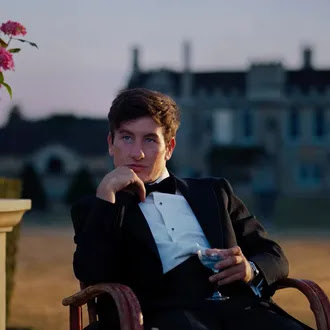
     For almost two hours, I enjoyed this film’s unrelenting assault on the cluelessly decadent and recklessly cruel British upper class as experienced by a naïve college freshman who has been befriended by the family’s son at Oxford. But in the final act, in a series of reveals (not to give too much away), filmmaker Emerald Fennell lets the rich off the hook.

     Drowsy looking Barry Keoghan, nominated last year for “The Banshees of Inisherin,” plays Oliver Quick (a name and character clearly inspired by Dickens), a nerdish middle-class student drawn into the obit of the rich, snobbish kids by Felix Catton (“Priscilla’s” Elvis, Jacob Elordi). In fact, Oliver has fallen hard for the tall, dark young man, despite Felix’s nonstop womanizing.

       After Oliver reveals to Felix that his drug-using father has died, Oliver is invited to spend the summer at the Catton estate. The film settles into a version of a corrupted “Downton Abbey,” updated to the 21st Century, with Richard E. Grant and Rosamund Pike deliciously playing the lord and lady of the manor. Also hanging around is daughter Venetia (Alison Oliver), cousin Pamela (an unrecognizable Carey Mulligan) and a classic stern, protective butler (Paul Rhys).

     Writer-director Fennell clearly enjoys pushing the envelope of good taste and expectations, as she did in “Promising Young Woman” (2020), but in “Saltburn” (the name of the Catton’s castle) she undercuts her own clever writing and characters for little more than shock value.          

PHOTOS:

Carey Mulligan and Bradley Cooper in “Maestro”  (Netflix)

Jeffrey Wright in “American Fiction.” (MGM)

Adam Driver in "Ferrari"  (Neon)

Barry Keoghan in “Saltburn”  (MGM)